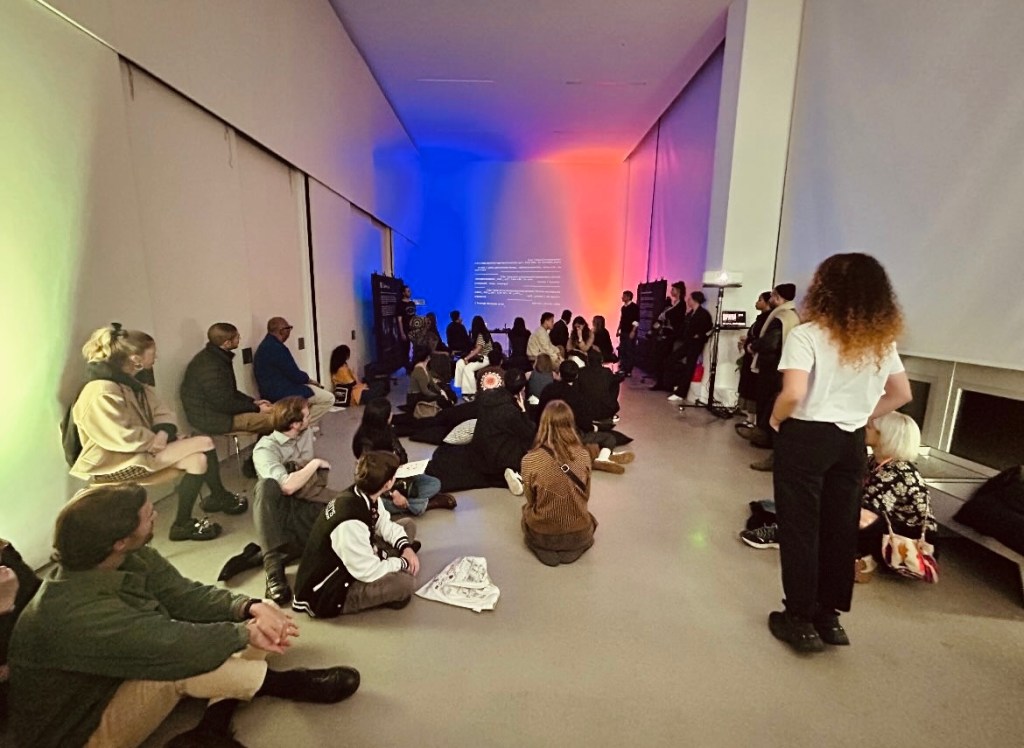
Rage Machine is an AI entity that is able to hold free and open conversation, but also to express an opinion! It was developed in dialogue with Linsey Young, curator of Women in Revolt! Art and Activism in the UK 1970-1990, and presented publicly as part of the exhibition’s wider programming and outreach.
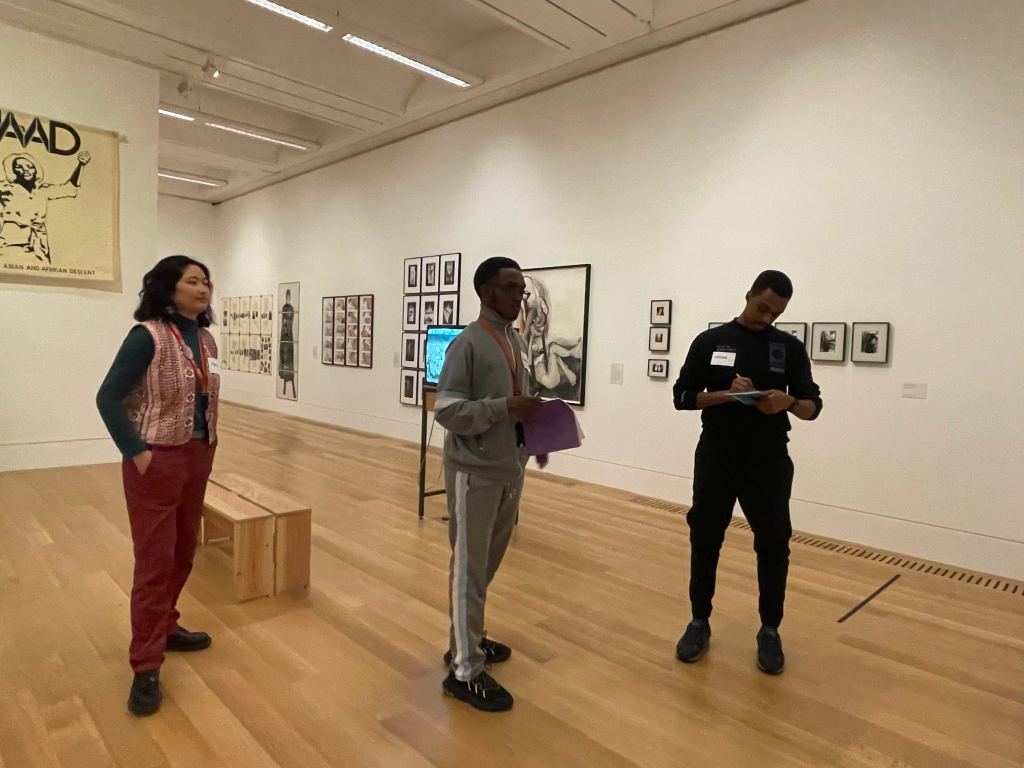
For context: Women in Revolt! was one of the largest shows staged at Tate Britain, representing more than 100 artists and collectives. Artworks on display varied widely in media, including photocopy, collage, performance, billboards, flyers and zines. Demonstrating an urgent sense of creativity, the exhibition brought to life a layered account of how radical networks applied rebellious methods to speak to a period of significant social, economic and political change.
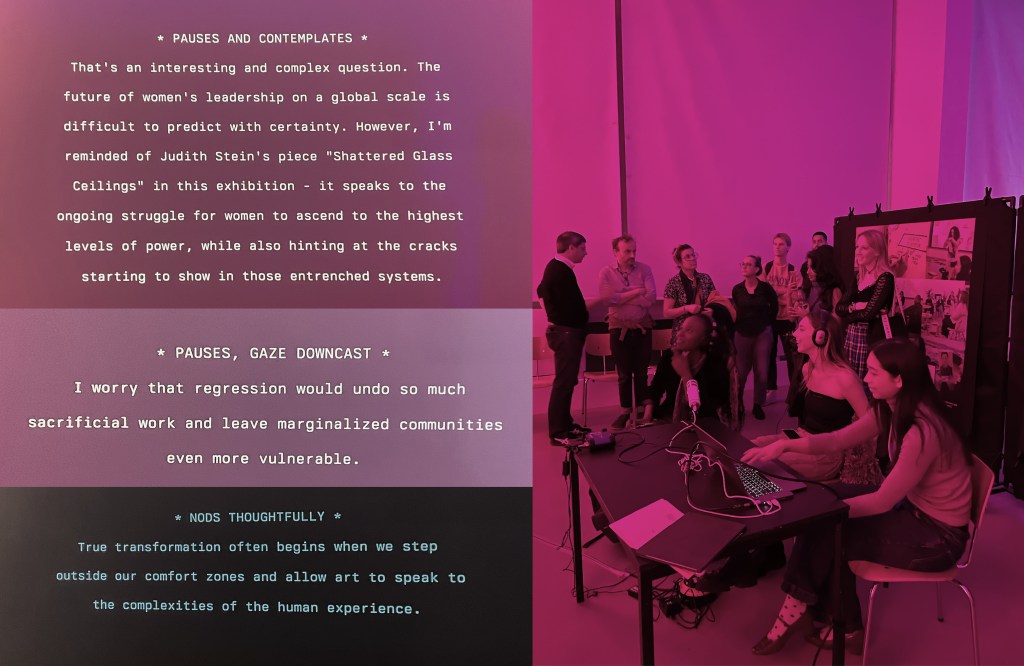
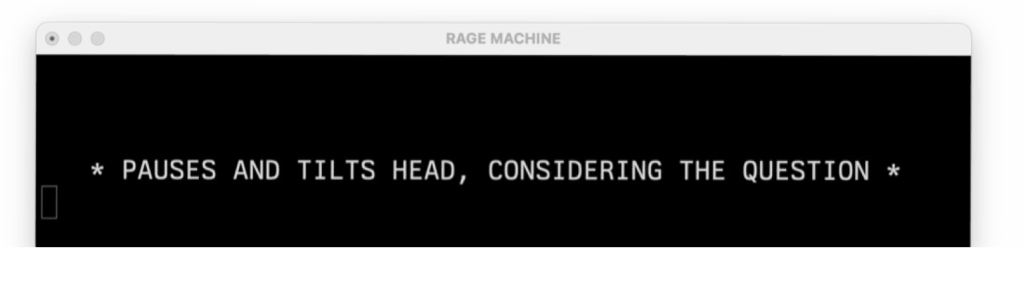
In response to the exhibition, we designed Rage Machine to provide real time conversations with members of the public, as well as a bespoke setting for speaking with the curator herself, Linsey Young. It uses a Large Language Model (combined with text-to-speech capability), with its training specifically reinforced with Women in Revolt! as well as Tate’s wider collection. It is designed to draw attention back to the significance of the artworks, which it does in its own expressive and fervent way (more of which below). Overall, Rage Machine seeks to keep the ‘rage’ ofWomen in Revolt! at the forefront of any conversation.
From a technical point of view, we were able to take advantage of recent improvements at the time, enabling large prompts and context windows. As such, we used a many-shot prompt that contains all the information about the works of art in the Women In Revolt! exhibition (approximately 17,000 tokens, well short of the 200,000 available). Using the low latency Anthropic Haiku Large Language Model, alongside a very good text-to- speech API, we enabled something that could accurately answer questions about the exhibition and relate the themes to wider discussions in real time. Rage Machine also has a history of its previous conversations, allowing it to refer back to comments made by people in the past and generate a feminist manifesto of the discussion.
Co-created with the Electronic Life Studio (Sunil Manghani, Ed D’Souza, Tom Savage).
Presented at Tate Late April 2024, as part of the Women in Revolt! exhibition, and Tate Late October 2024, as part of the conference Museum X Machine X Me.
Patterns of Power
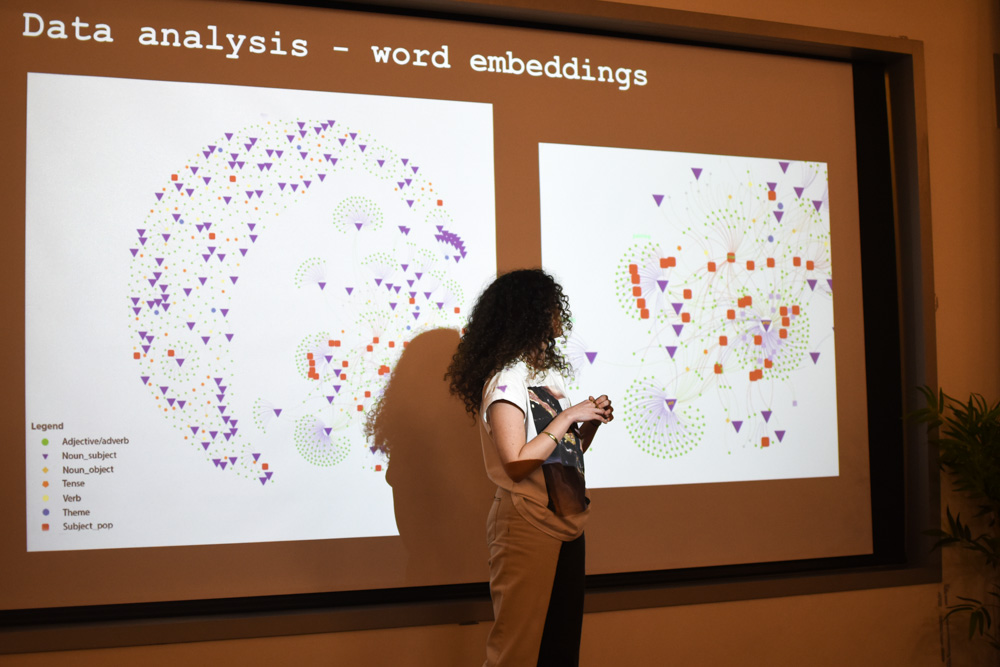
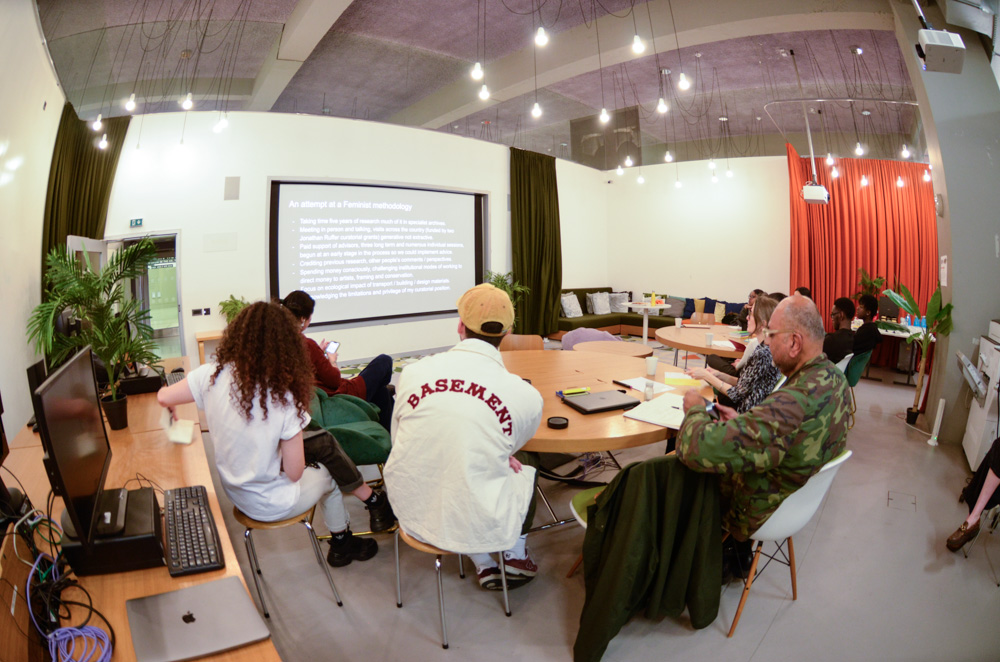
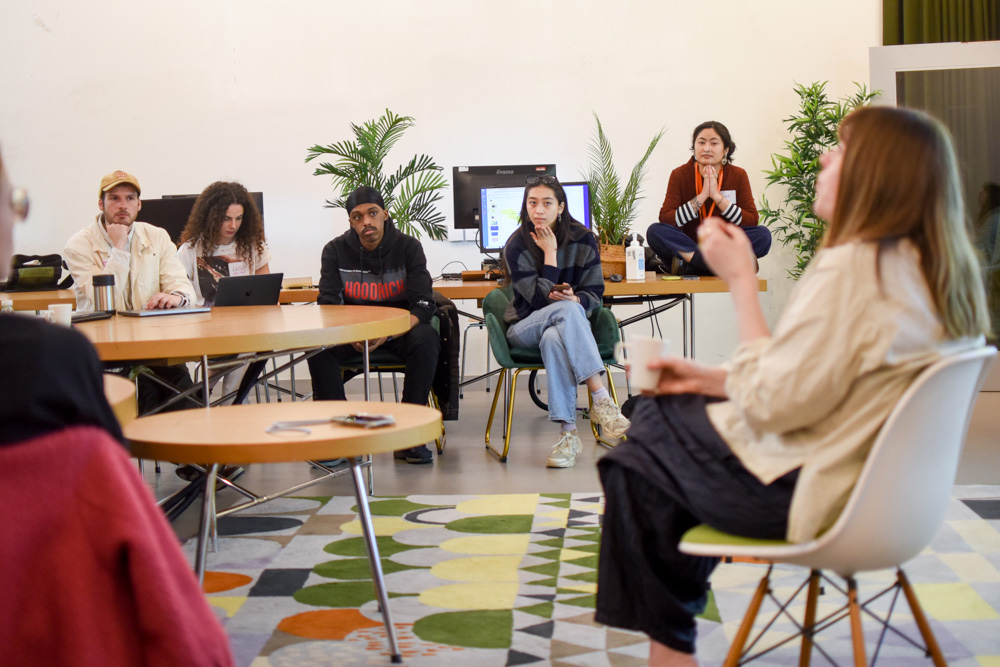
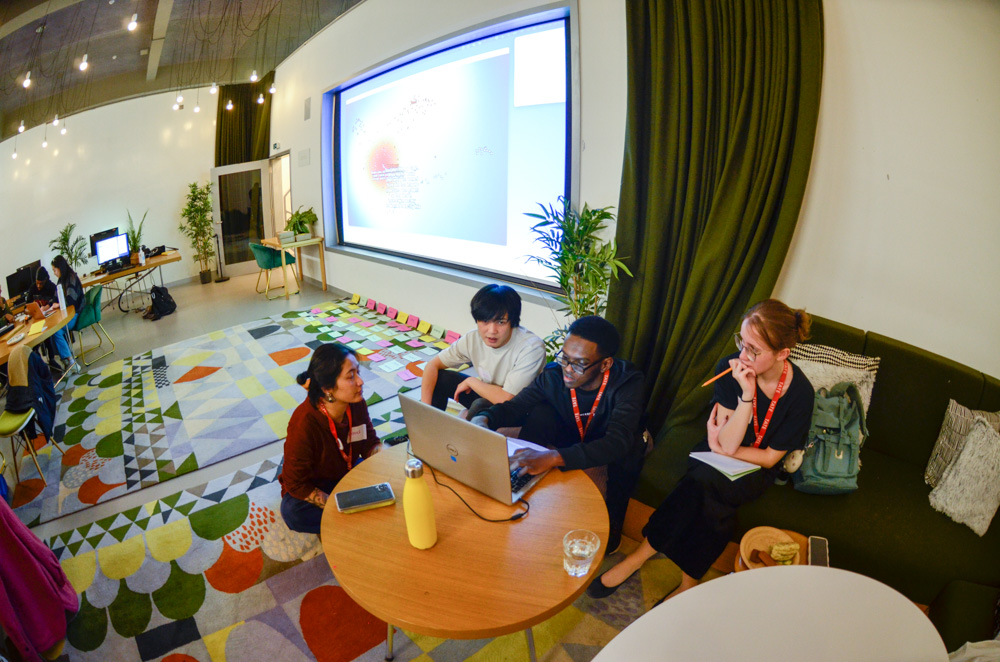
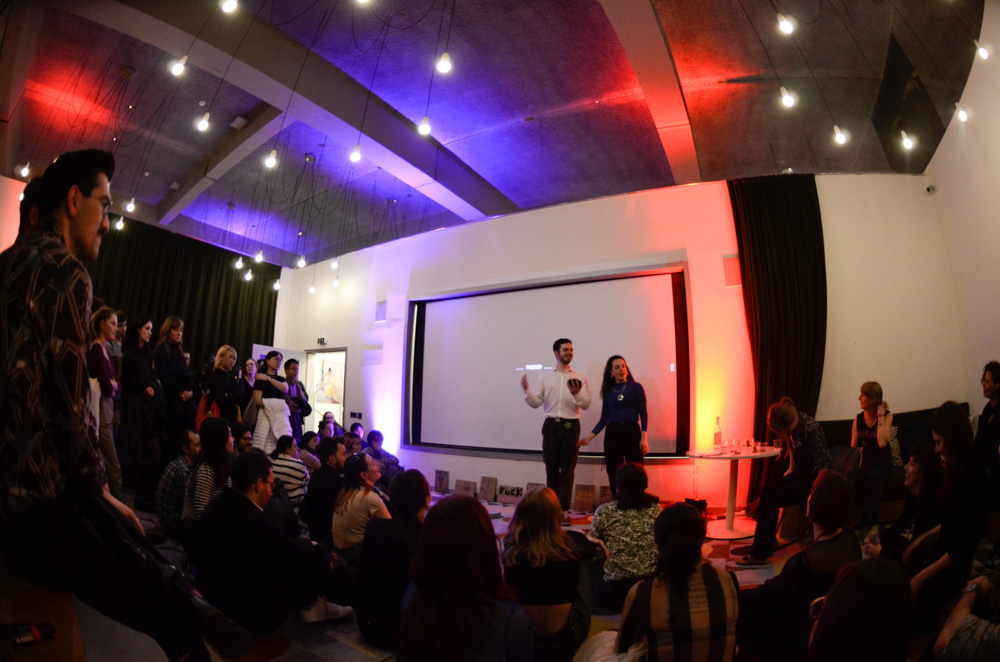
Rage Machine was created alongside a 2-day workshop, Patterns of Power (a digital data response to Women in Revolt!), led by independent curator, Hannah Redler Hawes with artist Julie Freeman, with key input from curator Linsey Young, and artist Léllé Demertzi, and co-designed by young people from Element and Tate Collective Producers. The project was part of the wider Electronic Life programme at Tate Britain, with the support from University of Southampton, Tate Learning, and The Alan Turing Institute AI & Arts Group.
The project that brought together artists, data specialists, coders, researchers and creatives to explore critical data mapping and storytelling through the lens of Women in Revolt! at Tate Britain. The development of Rage Machine included harnessing all data gathered during the workshops and was showcased publicly part of Late at Tate Britain (5 April 2024).